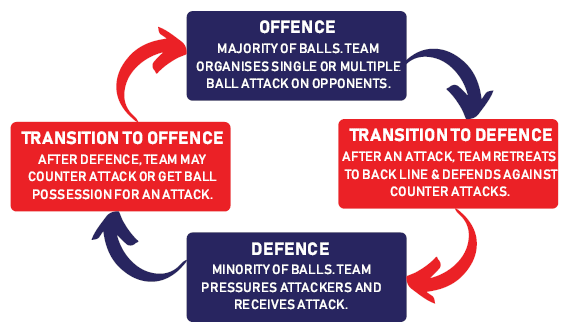
This lesson contains information on basic individual and team tactics used in dodgeball. These are the first tactics which players should learn. More advanced tactics as contained in our Player Development Framework are explored in the Level 2 Certificate in Coaching Dodgeball course.
A single ball attack is the most basic form of offence in dodgeball. This can be performed individually without any communication. It can be performed as an overarm throw, underarm throw, chest push or jump throw. Players should be taught to get as close to their target as possible, choose a vulnerable target and use throwing tips to throw with as much power and accuracy as possible.
Target selection is extremely important if a team is to play in this individualistic manner. Depending on their own strengths and weaknesses, and that of their opponents, they may focus on eliminating the following types of player first:
The most vulnerable opponents to gain a numerical advantage;
The opponent’s best throwers to lessen their firepower;
The opponent’s best dodgers whilst they have limited room to dodge;
The opponent’s best catchers so they can’t catch players back in;
The least mobile opponents to gain numerical advantage; or
Opposing ball holders to limit counterattacks.
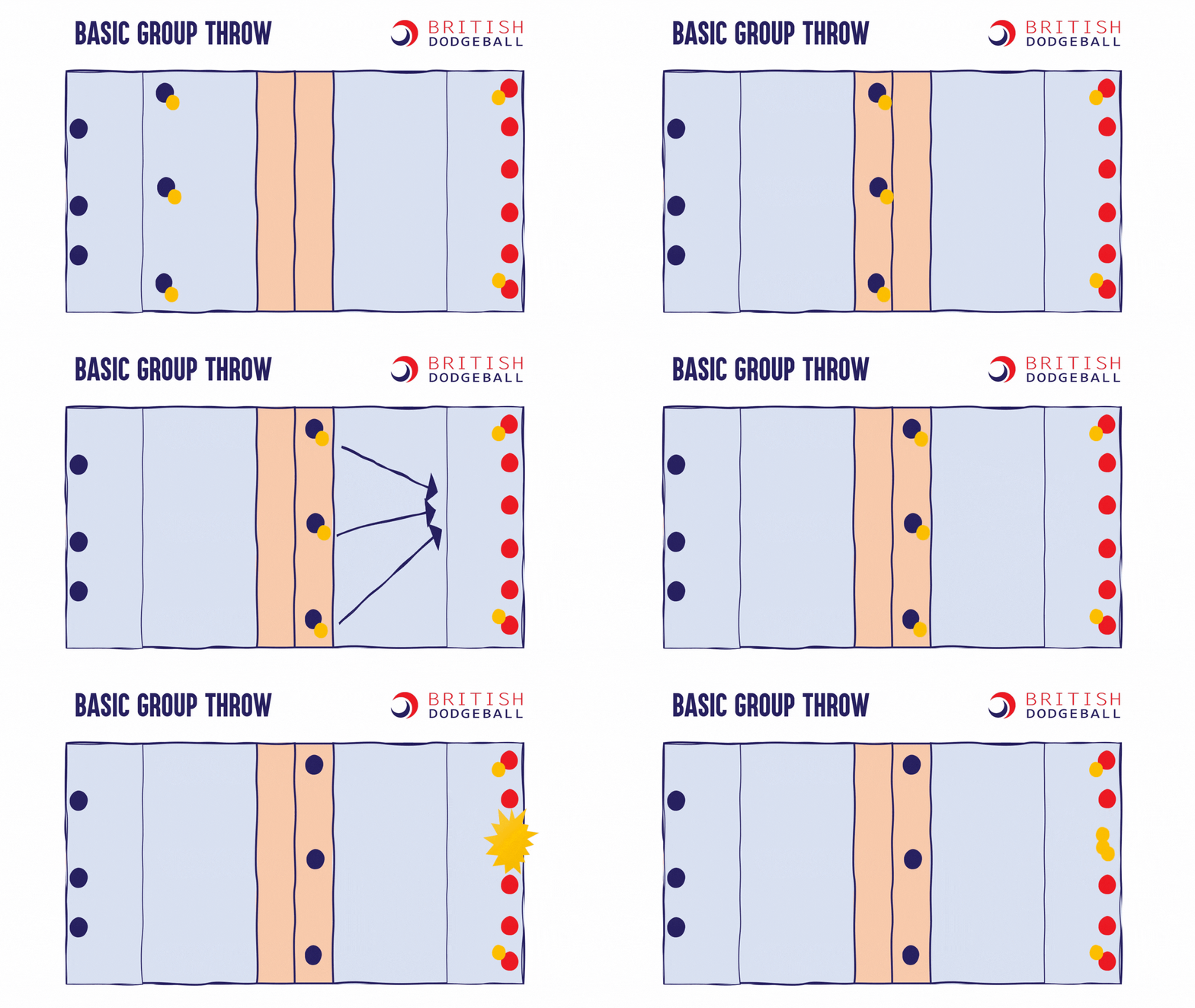
Basic Group Throw
A basic group throw is a coordinated multiple ball attack where all players with possession of a ball throw at the same time at one target. The human brain struggles to track multiple objects at once, and so this tactic increases the chances of hitting an opponent whilst reducing the chances of them making a catch.
It is therefore very useful against good catchers, dangerous players who your team wishes to eliminate early and to close matches out without giving away a catch.
To perform a group throw effectively, your team will need a calling system:
Calling System
A calling system is a quick way of communicating a play. Information should include an action being taken, a target and who is involved. We encourage coaches to be creative and design their own calling systems. Some example calls might look like the below:
Transition
Retreat After Throwing
Players are at the most vulnerable when they are closest to opponents without a ball to pressure or block with. Players should therefore retreat back after their team has attacked. After players have thrown, they should adopt a ‘ready’ position to dodge incoming attacks. They should then move backwards whilst still facing their opponents. Players who have held a ball should use this to create pressure on any counter attacking opponents in order to protect their team.
Defence
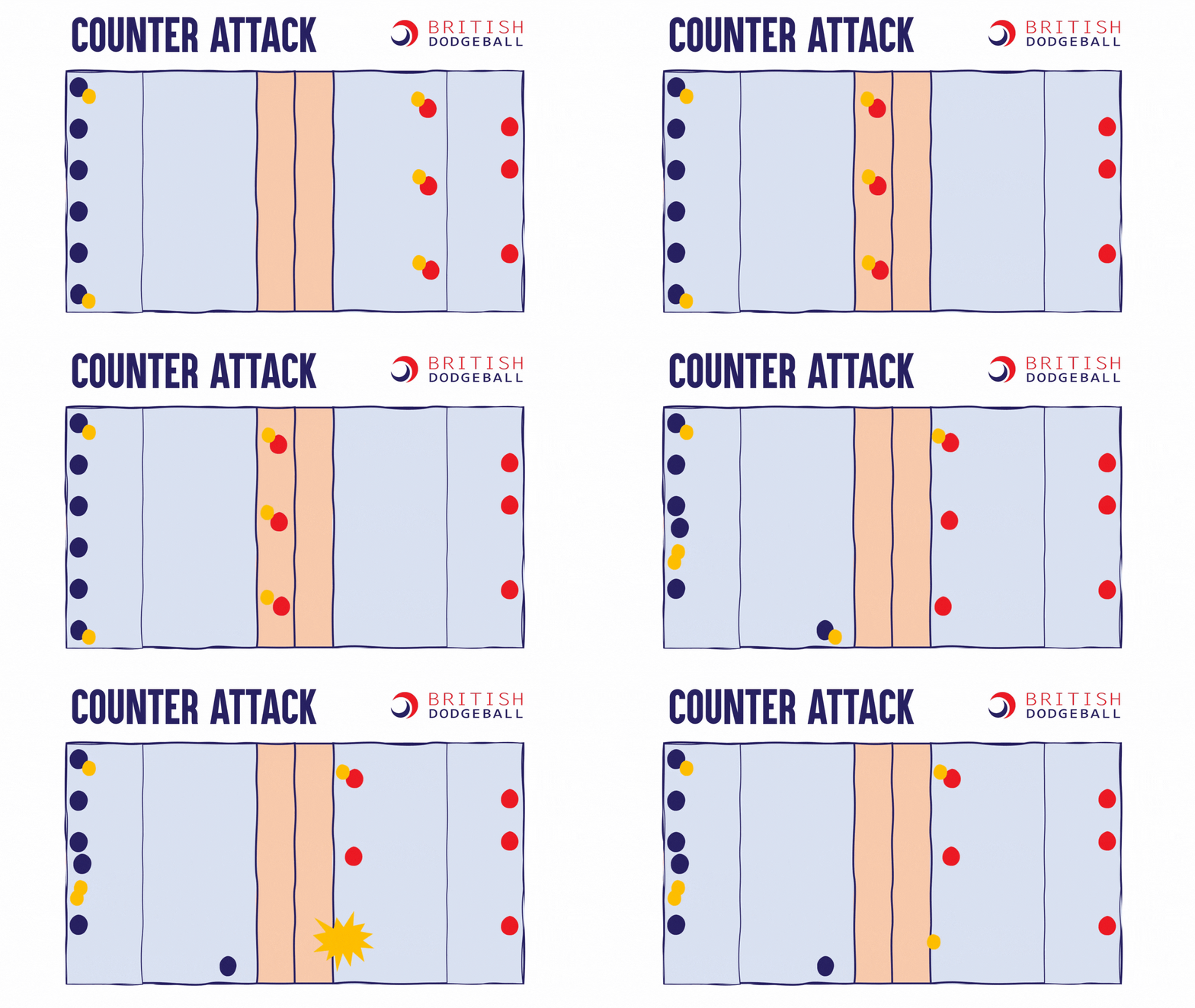
Counter Attack
Players with ball possession on the defending team should look to make pressure on attackers. One way of doing this is to counterattack. This skill is performed by:
Waiting for the attacking team to move up the court to attack.
Set off running as the attacking team throws their balls.
Block or dodge any incoming attacks whilst in movement.
Close the distance between yourself and your opponent and then throw to hit them out.
Learning how to use lateral space is important for both safety, and to maximise chances of staying in the game. Click the hotspots in the image to learn about how players can use lateral space properly.
Yes! Our courses are set up so you can start, pause and return to your learning at times which are convenient to you. There is no time limit to compete the course in. The only exception to this is the online Level 2 course, which is made up of 2 webinars and lessons to complete before/after certain points, but this is all clearly marked.
Who developed this course?
Our courses are developed by teaching and coaching professionals from around the world, led by a Physical Education specialist teacher and international dodgeball coach from the UK. The WDBF Coaching Committee endorses the courses we develop to ensure the contents are of high value to dodgeball specialists and generalist sports educators alike.
What are the technology requirements to take this course?
Any device with access to a browser can access this course in its entirety. No additional software (e.g., word processors) or hardware is needed, unless explicitly stated (such as recording equipment for the online Level 2 course). We recommend using Google Chrome to complete the course, although it should be compatible with all browsers.
Who is this course for?
Our courses are aimed at:
Anyone wanting to learn more about dodgeball
Physical Education teachers
Generalist sports coaches
Dodgeball coaches
Dodgeball players wanting to learn more about another code of the sport
It can be completed by anyone of any age, although it is recommended each learner is aged 13+. Anyone aged under 18 should get permission from a parent or guardian before signing up to online learning on this site.
What are the terms & conditions of purchasing a course?
Please see our refund & cancellation policy on our Policies page for more information.
After You Buy
I no longer have access to a course. What has happened?
Please make sure you are logged in to the site so we know it’s you trying to pick up where you left off.
I bought a course for my own account instead of another person by mistake. How do I transfer this to them?